
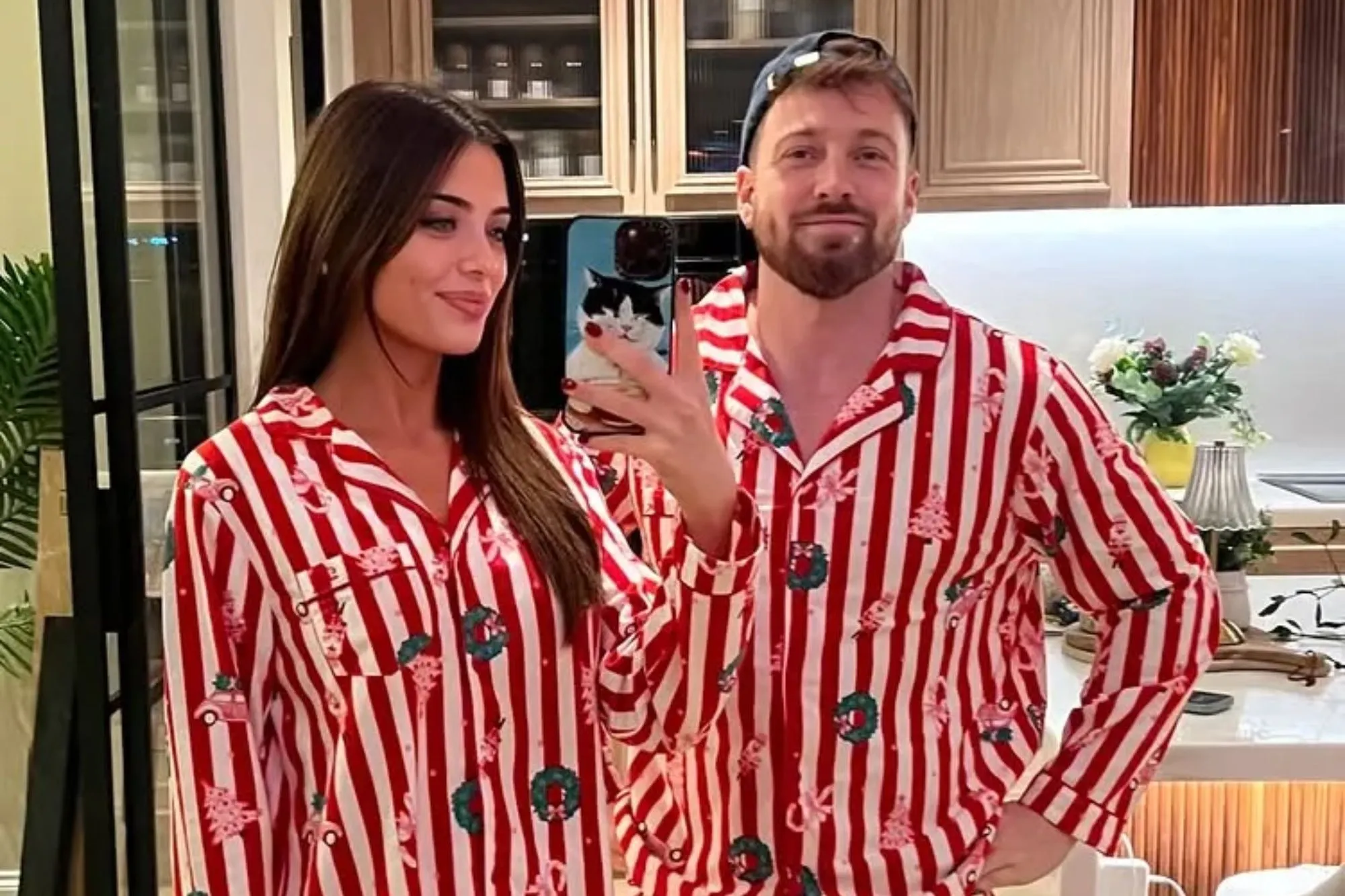
Sam Thompson wife news requires immediate clarification: Thompson is not married and recently ended a five-year relationship with Zara McDermott. The search itself reflects outdated assumptions or confusion about his relationship status, which shifted significantly when the couple confirmed their split at the end of last year. Thompson has since gone public with a new relationship, dating DJ Talitha Balinska, while McDermott has moved on with One Direction singer Louis Tomlinson.
The story here is less about marriage and more about how high-profile breakups unfold in real time across social media, how both parties manage narrative control, and how audiences track celebrity relationship transitions with intense scrutiny.
The Breakup Confirmation Strategy and Timing Analysis
Sam Thompson and Zara McDermott’s split was confirmed around late 2024, with sources indicating they had grown apart after a difficult year of separate work commitments. Thompson was in Australia working on the I’m A Celebrity spinoff show Unpacked, while McDermott remained in the UK focused on her clothing line and other projects.
From a practical standpoint, the timing and framing of the announcement matter significantly. The breakup was presented as amicable, with sources emphasizing there was no scandal or dramatic fallout, just natural drift caused by career pressures. That narrative choice protects both parties’ reputations and minimizes the potential for prolonged tabloid speculation.
What I’ve learned from watching similar breakup announcements is that controlled messaging early in the process can significantly influence how the story develops. By getting ahead of speculation and framing the split as mutual and respectful, Thompson and McDermott attempted to manage public perception and reduce intrusive coverage.
New Relationship Disclosure and Social Media Positioning
Thompson went Instagram official with his new partner Talitha Balinska in mid-December, notably on the eve of his ex-girlfriend’s birthday. The timing sparked speculation about whether it was intentional shade or coincidental overlap, illustrating how every post-breakup action gets analyzed for hidden meaning.
The reality is that social media timing in post-breakup scenarios always generates interpretation, whether intended or not. Thompson’s decision to make the relationship public when he did suggests he felt sufficient time had passed and wanted to control the narrative rather than let paparazzi photos or leaked information force premature disclosure.
He met Balinska after she was invited as a surprise guest to his live show at the O2 Arena, introduced by his friend and business partner Reza Amiri-Garroussi. This origin story positions the new relationship as organic and supported by his social circle, which helps legitimize it publicly and deflects accusations of rebound behavior.
McDermott’s Relationship Transition and Comparative Narrative Dynamics
Zara McDermott moved on quickly as well, beginning a relationship with Louis Tomlinson shortly after her split from Thompson. She went public with the relationship through birthday posts and appearances with Tomlinson’s family, signaling that the partnership is serious rather than casual.
Here’s what actually matters about these parallel transitions: both parties moving on simultaneously changes the public narrative from one person being left behind to both finding new paths forward. From a reputational standpoint, this balance reduces sympathy narratives and potential blame dynamics that often accompany celebrity breakups.
Look, the bottom line is that when both parties quickly establish new relationships, it validates the original breakup story. If they had genuinely grown apart rather than ending due to betrayal or conflict, the ability to move forward efficiently makes sense. The data tells us that audiences read these signals carefully, using new relationship timing as evidence either supporting or contradicting official breakup narratives.
Social Media Strategy and Audience Management Techniques
Both Thompson and McDermott have used social media strategically to shape their post-breakup narratives. Thompson’s Instagram posts with Balinska frame the relationship positively, emphasizing joy and new beginnings without dwelling on the past. McDermott has done similarly with Tomlinson, posting affectionate content that signals she’s moved forward emotionally.
This approach serves multiple purposes. It reassures fans that both are thriving, reduces speculation about lingering pain or conflict, and establishes new relationship contexts that discourage ongoing comparison with the previous partnership. What I’ve seen is that audiences eventually accept new pairings when they’re presented confidently and consistently, especially when both former partners demonstrate similar contentment.
The risk inherent in this strategy is that rapid transitions can be perceived as inauthentic or emotionally superficial if not handled carefully. The fact that both Thompson and McDermott waited several months post-split before going public with new relationships suggests they understood this risk and timed their disclosures to avoid that perception.
The Reality of Post-Breakup Media Cycles and Attention Economics
What matters most about Sam Thompson wife news is what it reveals about post-breakup media cycles and how celebrity relationship endings generate sustained attention even when neither party is particularly interested in prolonging coverage. The phrase “wife news” itself is inaccurate but persists because search algorithms reflect past patterns and audience expectations more than current reality.
From a media economics perspective, breakup stories perform well because they offer multiple narrative stages: the split announcement, the aftermath speculation, the first post-breakup appearances, the new relationship reveals, and the comparative analysis of who moved on better or faster. Each stage generates content opportunities and traffic, which explains why coverage continues even when the principals have clearly moved forward.
Thompson’s situation illustrates how difficult it is to control public narrative entirely, even with careful social media management and strategic disclosure. The search for “wife news” when no marriage ever existed demonstrates that audience understanding lags behind reality, creating ongoing confusion that media outlets exploit for engagement. From a practical standpoint, the only solution is consistent messaging over time, eventually updating public perception to match current circumstances. Until then, Thompson will likely continue fielding questions about a relationship that ended and a marital status he never held, a frustrating but predictable consequence of sustained public visibility

Previous Article
Martin Lewis wife Lara Lewington newsNext Article
Phillip Schofield wife Stephanie Lowe news