
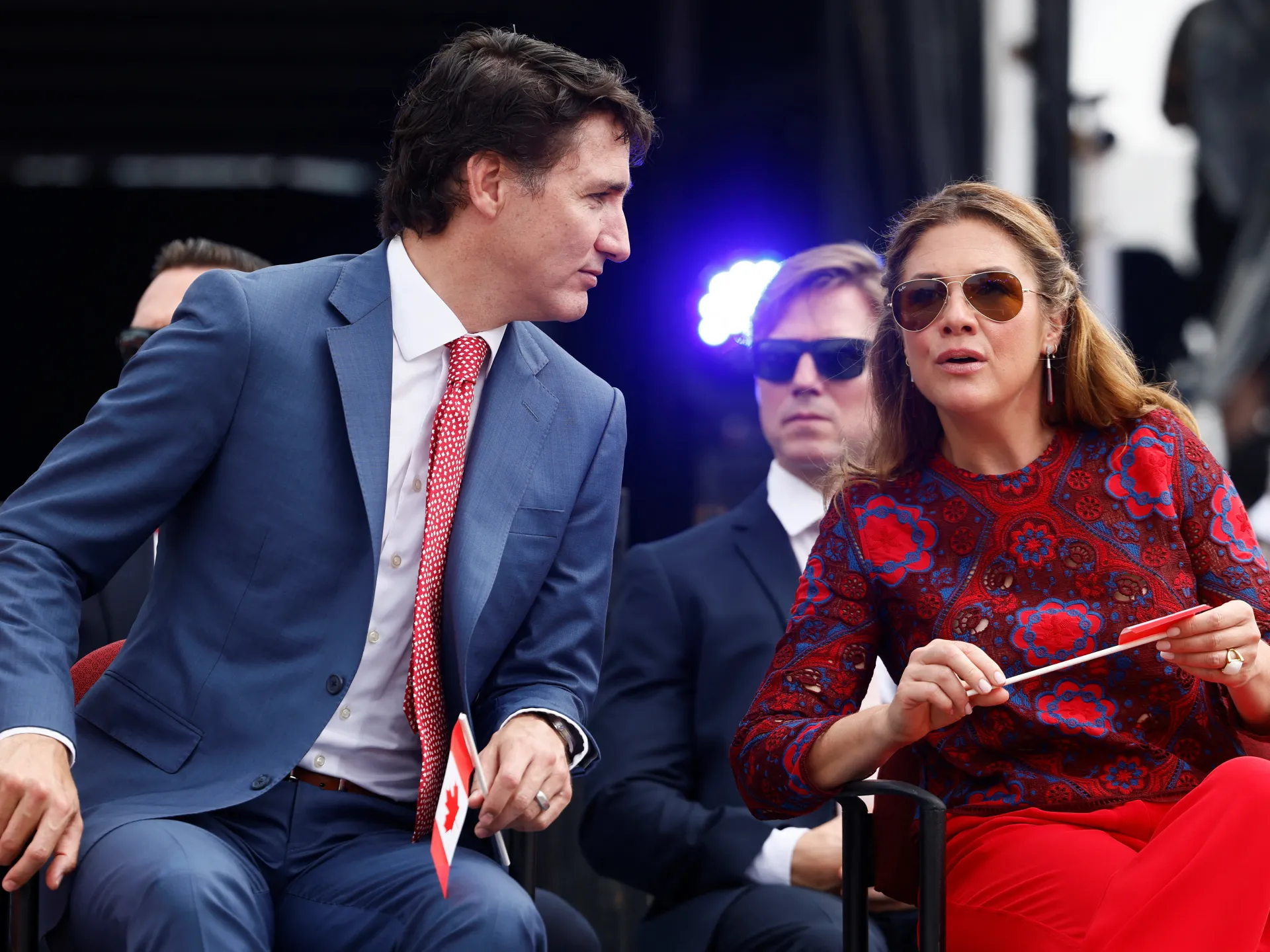
When a high-profile political marriage ends after nearly two decades, the public narrative shifts faster than most reputational strategies can manage. Justin Trudeau wife Sophie news continues to generate attention cycles well after their separation was confirmed, not because of scandal, but because of how rarely political figures navigate this kind of transition with transparency intact.
Sophie Grégoire Trudeau and Justin Trudeau announced their separation after meaningful and difficult conversations, signing a legal separation agreement that confirmed the end of their marriage. The former couple, who had been together for 18 years, released nearly identical statements emphasizing their commitment to co-parenting and maintaining a close family dynamic.
What makes this situation distinct is the speed at which public perception shifted. One moment, Sophie was a visible presence in official settings; the next, she moved to a separate residence while stepping away from government-supported duties. That kind of transition requires both sides to manage messaging carefully while the media machine looks for cracks in the story.
The Signals Behind Privacy Strategy, And Why It Matters
Sophie Grégoire Trudeau moved to a separate home in Ottawa while Justin Trudeau remained at Rideau Cottage, where their children primarily reside. Both parents share parenting responsibilities, and public appearances together were expected to continue, particularly during vacations.
From a practical standpoint, this arrangement reflects a deliberate choice to separate personal change from public image. The decision to announce the separation simultaneously on both Instagram accounts minimized the risk of competing narratives. That level of coordination is rare when emotions run high.
Sophie no longer takes on official duties and does not receive government staff for personal appearances. That shift signals a clean break from the institutional framework that once defined her public role.
Public Appearances, Media Cycles, And Reputational Risk Management
Sophie Grégoire Trudeau later opened up about the separation, stating it still “hurts deeply” and acknowledging they are “still trying to figure it out”. She broke her silence publicly while discussing her new self-help book on a podcast, demonstrating how personal narratives can be reframed through controlled media opportunities.
Her willingness to speak candidly about the emotional reality of separation, rather than maintaining a strictly polished facade, represents a calculated shift in how public figures manage vulnerability. Look, the bottom line is that audiences respond to authenticity when it feels earned, not manufactured.
Recent reports also surfaced about Justin Trudeau’s connection with public figures following the separation, further fueling media speculation. Sophie’s public comments during this period reflect a strategy of addressing the situation without escalating tension or creating additional story arcs.
The Reality of Legal Agreements, And What They Signal
The couple signed a legal separation agreement, confirming they had taken all necessary legal and ethical steps regarding their decision. That language is specific and deliberate, designed to close off questions about process while leaving personal details private.
What I’ve learned is that legal frameworks provide structure when emotions threaten clarity. In high-profile separations, the absence of litigation or public disputes becomes part of the narrative itself. The fact that no contentious legal battles emerged suggests both parties prioritized stability over spectacle.
Their last public appearance together before the announcement was on Canada Day in Ottawa. The timing of that appearance, followed shortly by the separation news, reflects the kind of precise sequencing that prevents speculation from spiraling before official confirmation.
Attention Economics, Timing, And The Cost of Speculation
Sophie Grégoire Trudeau was a prominent presence throughout Justin Trudeau’s political career, becoming a public figure in her own right through advocacy for mental health and gender equality. When someone with that level of visibility steps back, the absence itself becomes a story.
The challenge with high-profile separations is that the attention cycle doesn’t end when the announcement is made. Every subsequent public appearance, every social media post, every interview gets analyzed for subtext. That’s not paranoia; it’s the reality of operating in an environment where perception drives narrative.
The decision to remain a “close family” and to appear together regularly was designed to control that narrative. It’s a framework that prioritizes continuity for their children while acknowledging that public interest won’t simply evaporate.
Platform Dynamics, Authenticity, And The Long Game
Sophie’s statement emphasized the couple’s desire for authenticity and truth, noting they are both dreamers who want to be together “for as long as we can”. That phrasing is deliberate, leaving space for complexity rather than offering a clean, binary ending.
From a practical standpoint, managing a separation in the public eye requires balancing transparency with boundary-setting. The data tells us that audiences reward consistency over time, not just polished moments. Sophie’s willingness to discuss the emotional weight of the separation while maintaining respect for the relationship reflects that understanding.
Here’s what actually works: giving the public enough information to satisfy curiosity while protecting the parts of the story that genuinely matter. The Trudeaus’ approach demonstrates how that balance can be struck without either retreating entirely or oversharing in ways that create additional risk. Their strategy prioritized stability, co-parenting, and controlled messaging, allowing them to navigate a difficult transition without losing credibility.

Previous Article
Emmanuel Macron wife Brigitte newsNext Article
Bill Clinton wife Hillary Clinton news