
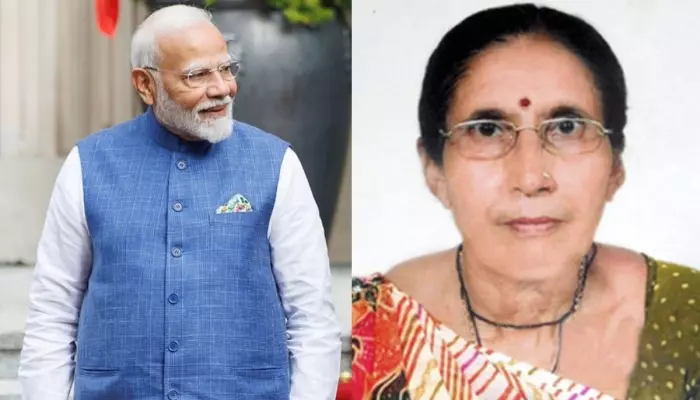
When a political leader’s marital status becomes a decades-long public enigma, the narrative isn’t about romance or scandal—it’s about privacy strategy, cultural context, and the deliberate construction of a public persona. Narendra Modi wife news centers on Jashodaben Modi, his estranged spouse from an early arranged marriage that lasted only three months, followed by more than four decades of separation without divorce.
Jashodaben Modi, now in her sixties, considers herself Narendra Modi’s wife despite having lived apart from him for over 40 years. The couple was married in an arranged ceremony when Modi was a teenager, but he left home shortly after to travel across India, eventually joining the RSS as a pracharak and never returning to the marriage.
What makes this situation unusual is the intersection of cultural tradition, political ambition, and personal identity. Jashodaben has consistently maintained that she views herself as Modi’s wife, stating that if he ever asked her to join him, she would immediately do so. That stance reflects both personal conviction and an awareness that her identity has become permanently linked to his public role.
The Reality of Early Marriage, And Its Long Consequences
The couple lived together for approximately three months after their marriage, after which Modi left home to travel across India as what he described to his family as a “sanyasi”. After a period of three years, Modi stopped visiting his wife and family as he became involved in his work as an RSS pracharak.
Media reports state that the marriage was never consummated. That detail matters because it shifts the narrative from a failed romantic relationship to a cultural obligation that was never fully realized. From a practical standpoint, the absence of a traditional marital relationship makes the ongoing separation less about personal conflict and more about incompatible life paths.
Jashodaben has stated that she and Modi parted on good terms, emphasizing there were never any fights between them. She blamed their situation on destiny and bad times, framing the separation as circumstantial rather than adversarial. That framing allows both parties to avoid blame while acknowledging the reality.
Public Recognition, Legal Status, And What It Signals
Narendra Modi publicly acknowledged Jashodaben as his wife in official documents filed during his election campaign, marking the first time he had formally recognized the marriage after decades of silence. That acknowledgment shifted the narrative from speculation to confirmed fact, forcing public discourse to confront the reality of the estranged marriage.
Jashodaben filed an RTI (Right to Information) request asking for an explanation of the security she receives from the government as the Prime Minister’s wife. She also expressed displeasure about having to use public transportation while her security guards enjoyed the privilege of a government vehicle.
That action reflects a deliberate assertion of her legal status. By filing the RTI, Jashodaben made clear that she expects the privileges and protections associated with being the Prime Minister’s spouse, even in the absence of a functional relationship. Look, the bottom line is that legal recognition carries tangible consequences, and she’s choosing to claim them.
The Cost of Public Identity, And Why She Maintains It
Jashodaben has stated that she does not feel bad about not being acknowledged by Modi for all those years, attributing their situation to fate. Yet her public statements and actions suggest a more complex emotional reality. She follows all of Modi’s activities through media reports, reading newspaper articles and watching news coverage.
She fasts four days a week, doesn’t eat rice, and reserves all her prayers for Modi. That level of devotion, sustained over decades without reciprocation, reflects both cultural conditioning and personal commitment. From a practical standpoint, her identity has become so intertwined with Modi’s public role that separating the two would require a fundamental redefinition of how she sees herself.
Jashodaben and Modi met for the last time in 1987, when he and his brother visited her to attempt a mutual divorce. She refused the arrangement, stating, “Why would I re-marry? You move forward on your path and I will on mine”. That refusal reflects a strategic decision: maintaining the legal tie preserves her status, even if it doesn’t restore the relationship.
Privacy Strategy, Political Optics, And The Limits of Control
Modi’s reluctance to publicly acknowledge the marriage for decades reflects a calculated privacy strategy. In a political culture where personal narrative shapes public image, an estranged wife complicates the story. The decision to remain silent allowed him to control the narrative around his personal life, presenting himself as devoted entirely to public service.
The eventual acknowledgment, however, suggests that the cost of continued silence outweighed the risk of disclosure. Once the information became public knowledge, maintaining the denial would have created greater reputational risk than simply confirming the facts. That’s a calculation that shifts over time as media scrutiny intensifies.
Here’s what I’ve learned: in high-stakes political environments, the question isn’t whether sensitive personal information will emerge, but when and under what conditions. Modi’s strategy was to delay acknowledgment as long as possible, then confirm it only when legally required, minimizing the window for media speculation.
Cultural Context, Narrative Economics, And The Long Game
The story of Jashodaben and Narendra Modi reflects cultural complexities around arranged marriage, religious devotion, and personal ambition. In many traditional contexts, a woman’s identity remains tied to her husband regardless of the functional state of the marriage. Jashodaben’s insistence on maintaining that identity, despite decades of separation, reflects those cultural norms.
From a practical standpoint, her situation offers limited options. Divorce would sever the legal tie but also remove the status and security that come with being recognized as the Prime Minister’s wife. Maintaining the marriage preserves her identity and legal standing, even if it doesn’t provide the relationship she might have wanted.
The data tells us that public interest in political figures’ personal lives doesn’t fade simply because the details are uncomfortable or complicated. Jashodaben’s story continues to generate attention because it challenges conventional narratives about marriage, duty, and identity. Her willingness to speak publicly, assert her legal status, and maintain her devotion creates a narrative that resists easy categorization. Modi’s strategy of minimal engagement allows him to avoid reinforcing the story while not denying the facts. Jashodaben’s strategy of selective visibility keeps her identity intact while navigating the constraints of a situation she cannot fully control.

Previous Article
Benjamin Netanyahu wife Sara Netanyahu newsNext Article
Vladimir Putin wife news